Algorithmic Edges in Live Tennis: Tracking Mid-Match Shifts Across Multiple Platforms
Written by Quinn Walter · Jul 2, 2026
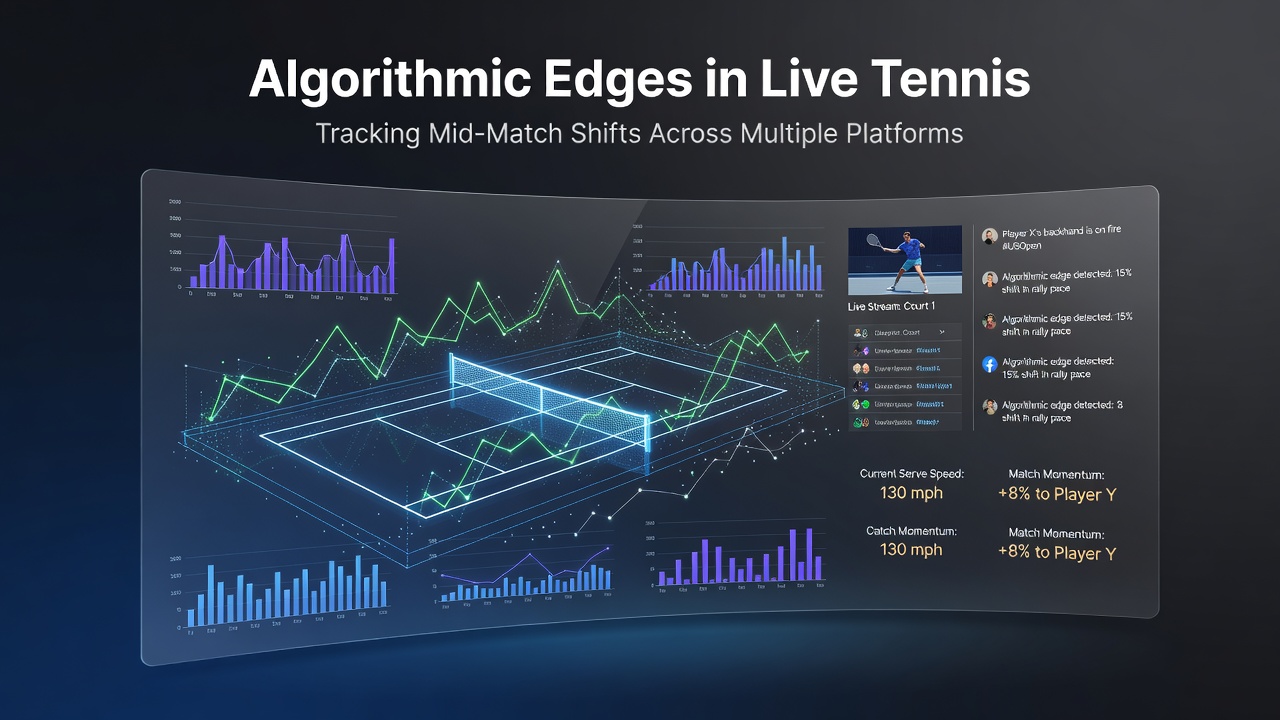
Algorithmic Edges in Live Tennis: Tracking Mid-Match Shifts Across Multiple Platforms
Algorithmic systems now monitor live tennis odds across multiple bookmakers and exchanges, capturing price movements that develop during individual points, games, and sets. These tools process real-time data feeds from major tournaments, including those held in July 2026, and flag discrepancies before human traders can react manually.
How Mid-Match Odds Movement Works in Tennis
Live tennis markets shift rapidly when a player breaks serve, saves break points, or changes tactics mid-set, and algorithms detect these changes by comparing prices on several platforms simultaneously. Data from professional matches shows that odds can move several percentage points within a single game, creating brief windows where implied probabilities diverge across operators.
Systems aggregate feeds from European, Asian, and North American bookmakers, then apply statistical models that account for variables such as surface type, fatigue indicators, and historical comeback rates. Observers note that these models update continuously, allowing automated alerts when a line on one platform lags behind the consensus derived from the others.
Multi-Platform Scanning Techniques
Operators and bettors deploy scripts that poll APIs every few seconds, pulling decimal, fractional, and American odds for the same match. The software converts all formats to a common probability scale, then calculates the maximum theoretical return if opposing positions are taken across two or more platforms before the next point begins.
Research from sports analytics groups indicates that the largest gaps often appear immediately after a service hold in long rallies or when weather conditions affect play on outdoor courts. Algorithms isolate these moments by cross-referencing ball-tracking data with betting market depth, reducing false positives that arise from low liquidity.

Case Examples from Recent Events
During a July 2026 hard-court event in North America, scanners identified a 4.2 percent divergence in the match-winner market after a top seed dropped the opening set. One platform adjusted its line within 90 seconds while two others held steady, allowing positions to be matched before the second set started. Similar patterns have appeared in European clay-court matches where algorithms flagged set-betting opportunities after rain delays altered player movement statistics.
Industry reports compiled by data providers such as those affiliated with the ATP Tour confirm that live-market volatility increases when matches extend beyond three sets, with the largest shifts occurring between the fourth and fifth sets. Algorithms trained on historical point-by-point data now assign confidence scores to each detected edge, helping users prioritize which discrepancies warrant immediate action.
Integration with Exchange and Bookmaker Data
Many platforms combine traditional bookmaker lines with exchange prices from operators that allow peer-to-peer matching. This dual-source approach reveals situations where one side of a market offers better value on the exchange while the opposing side remains available at a bookmaker. Automated tools execute the paired positions once the combined margin exceeds a user-defined threshold, typically within milliseconds of detection.
Studies conducted by academic researchers at institutions tracking global betting markets show that tennis produces more frequent live discrepancies than most other sports because of its continuous scoring structure and relatively small point margins. The same research highlights that July tournaments, with their mix of grass, clay, and hard surfaces, generate distinct movement signatures that algorithms learn to recognize separately.
Technical Requirements for Effective Tracking
Effective systems require low-latency connections to multiple data vendors, accurate timestamp synchronization, and fallback mechanisms when one feed experiences delays. Developers incorporate machine-learning layers that adjust for known biases, such as slower line movement on smaller tournaments or during late-night sessions when staffing levels drop at certain bookmakers.
Those who have examined the infrastructure note that successful implementations maintain redundant servers across different geographic regions to minimize the impact of regional outages. This architecture supports continuous scanning even when individual platforms undergo maintenance, preserving the ability to act on mid-match shifts as they occur.
Conclusion
Algorithmic monitoring of live tennis odds across platforms has become a standard practice for capturing mid-match value created by rapid scoring changes. Data from multiple providers demonstrates consistent opportunities during extended rallies, service breaks, and set transitions, particularly in high-profile events scheduled throughout July 2026. Continued refinement of these systems relies on improved data feeds and more sophisticated models that account for the unique dynamics of professional tennis matches.