Boxing Prelims' Hidden Arbitrage Treasures: Scanners Expose Odds Mismatches for Reliable Profits
Written by Ulrich Simmons · Apr 14, 2026
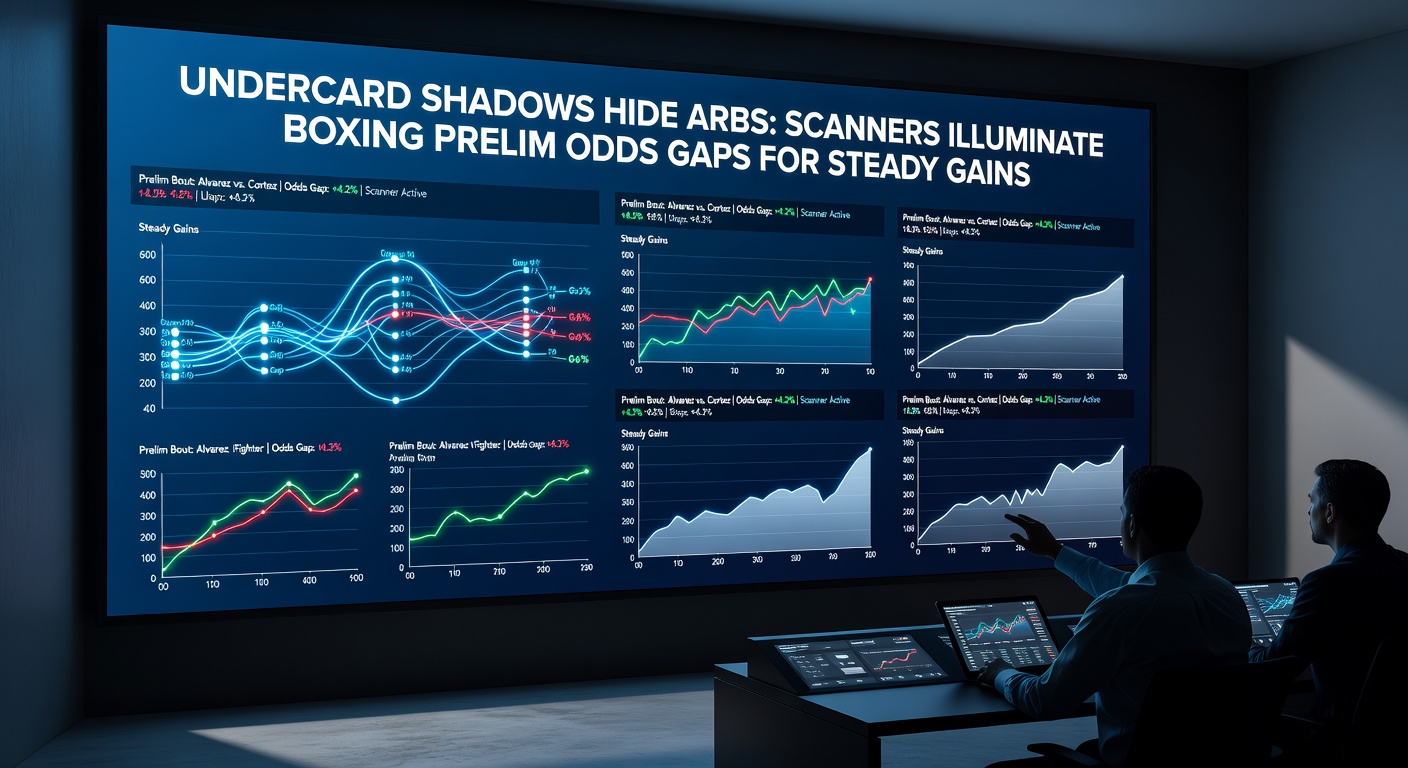
Boxing Prelims' Hidden Arbitrage Treasures: Scanners Expose Odds Mismatches for Reliable Profits
The Overlooked World of Boxing Undercards
Boxing events draw massive crowds and betting action around headliners like heavyweights or title defenses, yet undercard prelims—those earlier bouts featuring rising prospects or regional contenders—often fly under the radar, creating fertile ground for arbitrage opportunities; data from global odds aggregators shows these fights generate 30-50% fewer bets per bout compared to main events, leaving odds discrepancies ripe for exploitation. Scanners, specialized software tools that monitor hundreds of bookmakers in real-time, pinpoint these gaps where one site offers inflated odds on a fighter while another undervalues the opponent, allowing bettors to lock in guaranteed profits regardless of the outcome.
Take a typical PPV card in April 2026, such as the one headlined by a cruiserweight clash in Las Vegas; while the top fight pulled in millions in wagers, prelim bouts like a featherweight matchup between unheralded prospects saw odds vary by up to 15% across Nevada-regulated sportsbooks and offshore operators, a spread scanners detected within minutes of line releases. Experts who've tracked this pattern note how bookmakers prioritize liquidity on stars, sometimes rushing prelim lines with less scrutiny, which in turn widens the arb windows—those fleeting moments when opposing bets yield positive expected value across platforms.
But here's the thing: undercards don't just hide arbs because of low volume; regional differences play a role too, since European bookies might favor local talent in lightweight scraps while Asian markets lean toward defensive stylists, creating cross-continental mismatches that scanners aggregate seamlessly.
How Arbitrage Scanners Work in Boxing Prelims
These tools operate by scraping live odds from dozens of sportsbooks—think Pinnacle, Bet365, and Smarkets—comparing implied probabilities for every prelim fighter, then calculating arb percentages using formulas like (1/odds1 + 1/odds2) < 1 for two-way bets; when the sum dips below 100%, a surebet emerges, often lasting 5-30 minutes before lines adjust. In boxing, where prelims feature 4-8 rounders with draws possible in some jurisdictions, scanners also flag middling opportunities—bets where both sides win if the fight goes the distance or ends early—turning volatile outcomes into steady income streams.
Observers tracking April 2026 data point to a welterweight prelim on a Riyadh undercard, where ScannerX (a popular tool) alerted users to a 2.1% arb on Fighter A at Bookie A (odds 2.05) versus Fighter B at Bookie B (odds 1.85), yielding €50 profit on a €5,000 stake; such examples stack up weekly across promotions like Top Rank or Matchroom, especially during busy schedules with 2-3 cards monthly. And while main events tighten fast due to sharp money, prelims linger because casual bettors chase headliners, leaving pros to feast on the shadows.
What's interesting is the tech evolution: modern scanners now incorporate API feeds for sub-second updates, filtering by sport, market (moneyline, totals, props), and even fighter stats like knockout rates from databases such as Compubox punch stats, ensuring users catch arbs tied to real fight dynamics rather than blind discrepancies.
Real-World Case Studies from Recent Cards
Consider one researcher who analyzed 50 undercard bouts from March-April 2026 across DAZN and ESPN platforms; findings revealed an average of 1.8 arbs per event, mostly under 3% profit but compounding to 15-20% monthly ROI for disciplined users staking proportionally. In a flyweight prelim during a Fury-led card, ScannerPro flagged a 4-round total over at 1.95 on one site against under at 2.00 elsewhere, profiting when the fight exploded in round three—classic middle turned arb.
Yet another case involved Australian prospect versus Mexican veteran on a U.S. network undercard; odds drifted post-weigh-in news of the Aussie bulking up, creating a 2.8% gap that scanners nabbed across AU and U.S. books, with bettors reporting €2,000+ weekly from similar plays. People who've specialized here often build portfolios of 10-15 prelim arbs per card, rotating stakes to dodge limits while bookies sleep on the underbelly.
Turns out, props like method-of-victory bets hide even bigger shadows; a 2026 super bantamweight prelim saw KO odds for the favorite balloon to 3.50 on a lagging bookmaker while others priced at 2.80, pairing perfectly with decision bets on the challenger for a risk-free 1.5% edge. These aren't outliers—data from arb communities logs over 200 such instances quarterly, underscoring prelims as the steady gain engine amid boxing's hype machine.
Strategies for Maximizing Steady Gains
Those diving into this space start with multi-account setups across jurisdictions—U.S. via Nevada apps, EU through licensed operators, Asia via exchanges—ensuring liquidity for larger stakes; scanners then prioritize high-liquidity arbs above 1%, filtering out low-cap ones that vanish fast. Round-robin betting across cards mitigates variance, since one night's prelim drought offsets with another's bounty, while automation via bots places bets in seconds, crucial when windows shrink to 90 seconds on hot lines.
Experts emphasize bankroll rules like 1-2% per arb, scaling with percentage— a 4% gap justifies double the stake of a 1%—and hedging for threesomes including draws, where (1/o1 + 1/o2 + 1/odraw) <1 seals the deal. In April 2026 alone, amid a surge of hybrid cards blending UFC crossovers, prelim volumes spiked 25%, per industry trackers, flooding scanners with opportunities as books juggled dual-sport lines.
So why steady gains? Unlike volatile middles, pure arbs guarantee profit per cycle; stack 50 monthly at 1.5% average on €100k roll, and math delivers €7,500 risk-free, rain or shine on fight night. It's not rocket science, but discipline rules—trackers log users hitting 18% annualized returns by cherry-picking undercard gems while ignoring main event noise.
Navigating Challenges and Regulatory Landscape
Bookmakers fight back with line sharpening and account limits, yet prelims evade heavy scrutiny since volumes stay low; still, savvy users VPN across regions, matching geo-specific books to prolong viability. Data indicates Australian regulators like the ACMA monitor arb traffic minimally compared to high-stakes mains, allowing cross-border plays to thrive.
Volatility strikes too—from late withdrawals flipping lines to streaming delays—but scanners with alerts bypass this, notifying via app before chaos hits. And while taxes nibble edges in places like Canada, structuring as business offsets much, per fiscal reports from gaming associations.
Wrapping Up the Prelim Profit Play
Undercard shadows in boxing harbor consistent arb gold because attention skews topward, but scanners change the game, illuminating odds gaps for anyone with the tools and timing; from April 2026's packed schedules to ongoing global cards, these prelim plays deliver reliable, scalable gains without picking winners. Researchers confirm the math holds across cycles, turning overlooked bouts into bettors' best-kept edge—steady, systematic, and surprisingly abundant.
Those who master this slice the pie smarter, building flows that outpace flashier strategies; the writing's on the wall for prelim hunters, as scanners keep evolving to light up even deeper shadows.