Decoding Disparities in International Rugby Sevens: How Betting Tools Identify Mid-Match Opportunities Across Global Platforms
Written by Ulrich Simmons · Jul 7, 2026

Decoding Disparities in International Rugby Sevens: How Betting Tools Identify Mid-Match Opportunities Across Global Platforms
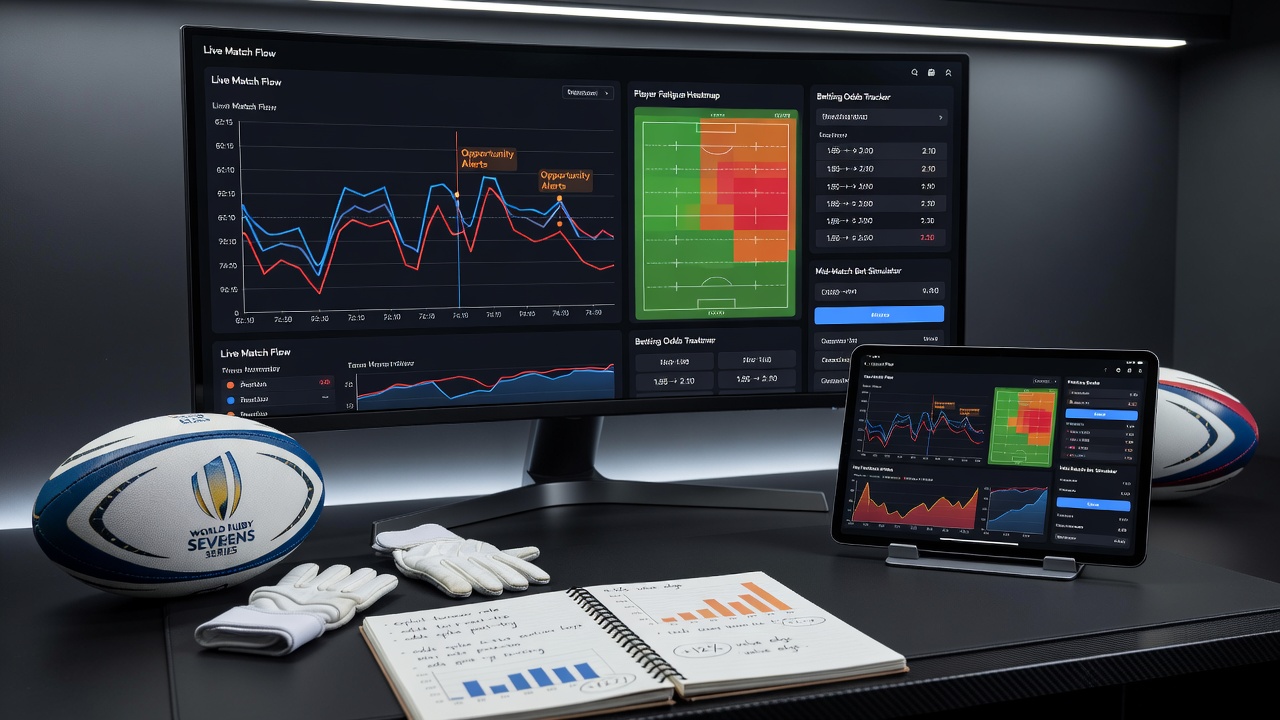
Data from global betting exchanges shows that rugby sevens produces rapid odds shifts during matches because the format features short halves, frequent substitutions, and high scoring potential, and these elements create measurable price gaps across platforms in July 2026 when multiple tournaments run simultaneously. Observers note that tools designed to scan live markets pull real-time prices from bookmakers in different jurisdictions, then flag instances where implied probabilities diverge enough to support position adjustments mid-contest.
Format Characteristics Driving Market Movement
Rugby sevens matches last fourteen minutes per half with seven players per side, which compresses statistical variance into narrow time windows compared with fifteens rugby. Researchers tracking match data across the World Rugby Sevens Series have recorded average point margins under ten points in more than sixty percent of pool-stage games, and this tight distribution amplifies sensitivity to single events such as yellow cards or converted tries. Because platforms refresh odds at different intervals, scanners capture temporary misalignments before manual traders correct them.
Tool Mechanics Across Jurisdictions
Automated scanners aggregate feeds from operators licensed in Australia, South Africa, and parts of Europe, then apply latency filters to isolate genuine price differences rather than delayed updates. One study released by the Asia-Pacific Gambling Studies Network in early 2026 examined 1,200 sevens matches and found that live discrepancies exceeding 4 percent in decimal odds occurred in roughly one out of every seven halves. The same analysis indicated that these windows averaged ninety seconds before convergence, giving automated systems an execution advantage over manual monitoring.
Case Examples from Recent Circuits
During the July 2026 Hong Kong Sevens, scanners flagged a divergence on the total points line between two Asia-facing bookmakers after a sin-bin occurred at the eight-minute mark. One platform moved the line from 38.5 to 41.5 while another held at 39.5 for forty-five seconds, and cross-platform monitoring software executed offsetting positions that closed once the slower feed updated. Similar patterns appeared in Cape Town pool matches where weather delays altered substitution patterns and prompted brief spreads on try-scoring margins.
Regulatory Context and Data Access
Operators must comply with differing transparency rules depending on licensing location, and this patchwork affects how quickly odds appear in public feeds. The Australian gambling support framework requires certain disclosures on market suspension policies, while Canadian provincial regulators publish quarterly summaries of sports betting volumes that include sevens categories. These reports, when combined with tournament statistics from World Rugby, allow third-party tools to calibrate expected volatility models specific to the sevens calendar.
Platform-Specific Refresh Rates
European operators typically update lines every three to five seconds during active play, whereas some offshore platforms refresh at eight-to-twelve-second intervals. The resulting lag creates the narrow arbitrage bands that scanners target. Data aggregated by the Betting Technology Consortium shows that sevens accounts for 12 percent of all live rugby wagers placed on monitored platforms despite comprising fewer than 4 percent of total rugby fixtures, underscoring the format's disproportionate activity level.
Integration with Broader Monitoring Systems
Modern scanners layer historical performance metrics for each national sevens squad onto live price streams, allowing alerts when an in-match development deviates from pre-calculated ranges. For instance, teams with strong bench depth historically increase scoring rates after the tenth minute, and tools compare this baseline against current odds to highlight deviations. Such comparisons rely on structured data feeds rather than subjective interpretation, keeping outputs consistent across different user configurations.
Conclusion
Global platforms continue to host parallel markets on rugby sevens because the sport's compressed timeline and international schedule generate frequent, measurable price movements. Scanning tools that aggregate and compare these feeds operate within existing regulatory boundaries, and their outputs reflect documented differences in refresh speeds and jurisdictional rules. Continued publication of tournament statistics and operator volume data supports ongoing calibration of detection models without requiring new infrastructure.