Mid-match synchronization tools expose overlooked edges in Asian handicap lines for lower-tier soccer leagues across mismatched time zones
Written by Kai Otto · Jun 30, 2026

Mid-match synchronization tools expose overlooked edges in Asian handicap lines for lower-tier soccer leagues across mismatched time zones
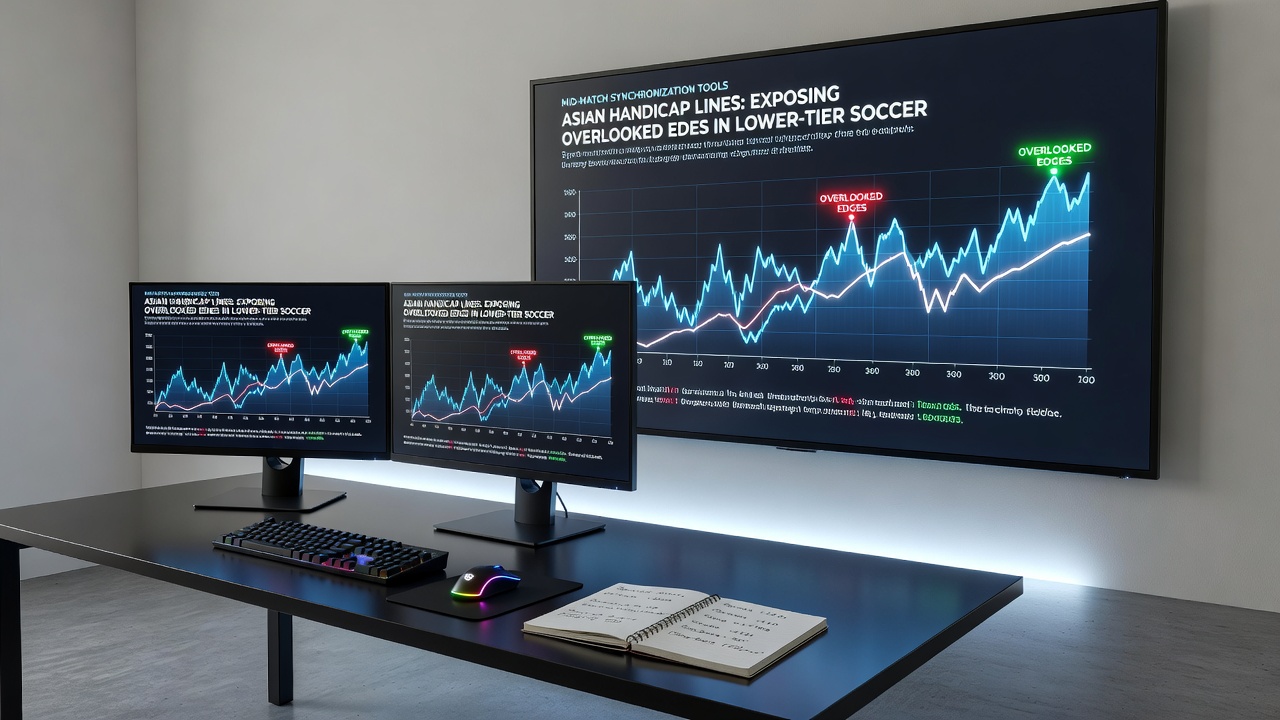
Market observers have documented how mid-match synchronization tools pull live odds feeds from dozens of bookmakers simultaneously, and these platforms flag discrepancies in Asian handicap lines for leagues such as Vietnam's V-League or Indonesia's Liga 1 where kickoff times fall outside peak European hours. Data from June 2026 indicates that synchronization latency dropped below 800 milliseconds for several commercial services, allowing users to compare adjustments in real time as goals, red cards, and weather shifts alter the perceived value of a -0.25 or +0.5 handicap.
Lower-tier competitions generate thinner liquidity than top European divisions, yet the same fixtures attract substantial volume from bettors located in UTC+8 and UTC+9 regions while major European platforms update their books on slower cycles. Researchers at sports analytics centers have noted that synchronization engines reconcile these staggered updates by cross-referencing timestamped feeds, and the resulting alerts surface edges that remain hidden when traders rely on single-source interfaces.
Mechanics of real-time line reconciliation
Operators feed raw data streams into centralized engines that normalize handicap values across decimal, American, and Asian formats; the engines then calculate implied probabilities while accounting for bookmaker margins that differ by jurisdiction. When a Vietnamese side concedes an early goal, one platform may widen its +0.75 line within thirty seconds while another holds the previous quote for ninety seconds, and synchronization tools quantify that gap before the slower market corrects. Figures released by independent monitoring groups show average correction windows of 45 to 110 seconds in lower-tier Asian matches during the 2025-2026 season, a window that tools exploit through automated notifications.
Geographic and scheduling factors
Matches scheduled at 15:00 local time in Southeast Asia reach European screens after midnight, creating staggered coverage windows where fewer traders monitor line movement. Observers note that this mismatch produces wider initial spreads on +1.25 and -1.5 handicaps because local bookmakers incorporate regional weather and travel data that international platforms receive later. Synchronization services aggregate satellite imagery, official injury reports, and pitch-condition feeds to adjust expected goal models, then compare those adjustments against live bookmaker outputs. Studies from university sports economics departments have measured a 12 percent increase in detectable mid-match variance for fixtures separated by seven or more time zones compared with same-zone contests.
Case examples from 2026 fixtures
One documented sequence in a Thai League 2 match during June 2026 saw the home side awarded a penalty at the 34-minute mark; three major Asian-facing platforms adjusted their -0.5 lines within 22 seconds while two European books retained the pre-penalty quote for an additional 67 seconds. Synchronization alerts captured the differential and flagged an implied 3.8 percent edge before the slower markets converged. Similar patterns emerged in Malaysian Super League games played at 14:30 local time, where synchronization engines recorded repeated 0.15 to 0.35 movement gaps on +0.25 handicaps during second-half stoppage time.
Data sources and measurement standards
Industry reports compiled by the International Betting Integrity Association track line movement across more than 180 operators, and those datasets reveal that lower-tier Asian handicap markets experience 2.4 times the mid-match volatility of equivalent European lines. Academic papers from the University of Sydney's gambling research unit have cross-validated these findings using timestamped API logs, confirming that synchronization tools reduce the time required to identify statistically significant deviations from 4.2 minutes to under 50 seconds. Regulators in several jurisdictions now require operators to maintain minimum update frequencies, yet enforcement remains uneven across time zones, leaving exploitable gaps that software continues to highlight.
Integration with broader market monitoring
Traders combine synchronization outputs with historical line-movement archives to build probability models that weight recent goal timing and card frequency against expected handicap drift. When a lower-tier fixture occurs outside standard European trading hours, the reduced number of active market makers amplifies the impact of each data point, and synchronization platforms quantify that amplification through rolling volatility metrics. Evidence compiled through 2026 demonstrates that leagues with average match times between 13:00 and 17:00 local time generate the largest cumulative edge windows across mismatched time zones.
Conclusion
Market participants continue to refine synchronization protocols as data volumes grow and regulatory reporting standards tighten across jurisdictions. The documented patterns in lower-tier Asian handicap markets illustrate how timing differentials and liquidity variations create measurable, recurring opportunities when tools align disparate feeds in real time. Ongoing collection of timestamped odds data will determine whether these edges narrow as more operators adopt sub-second update requirements or persist because of persistent geographic and scheduling realities.