Motorsports Momentum: Scanners Snag Live Arbitrage in Formula E Races
Written by Iris Beck · Apr 2, 2026
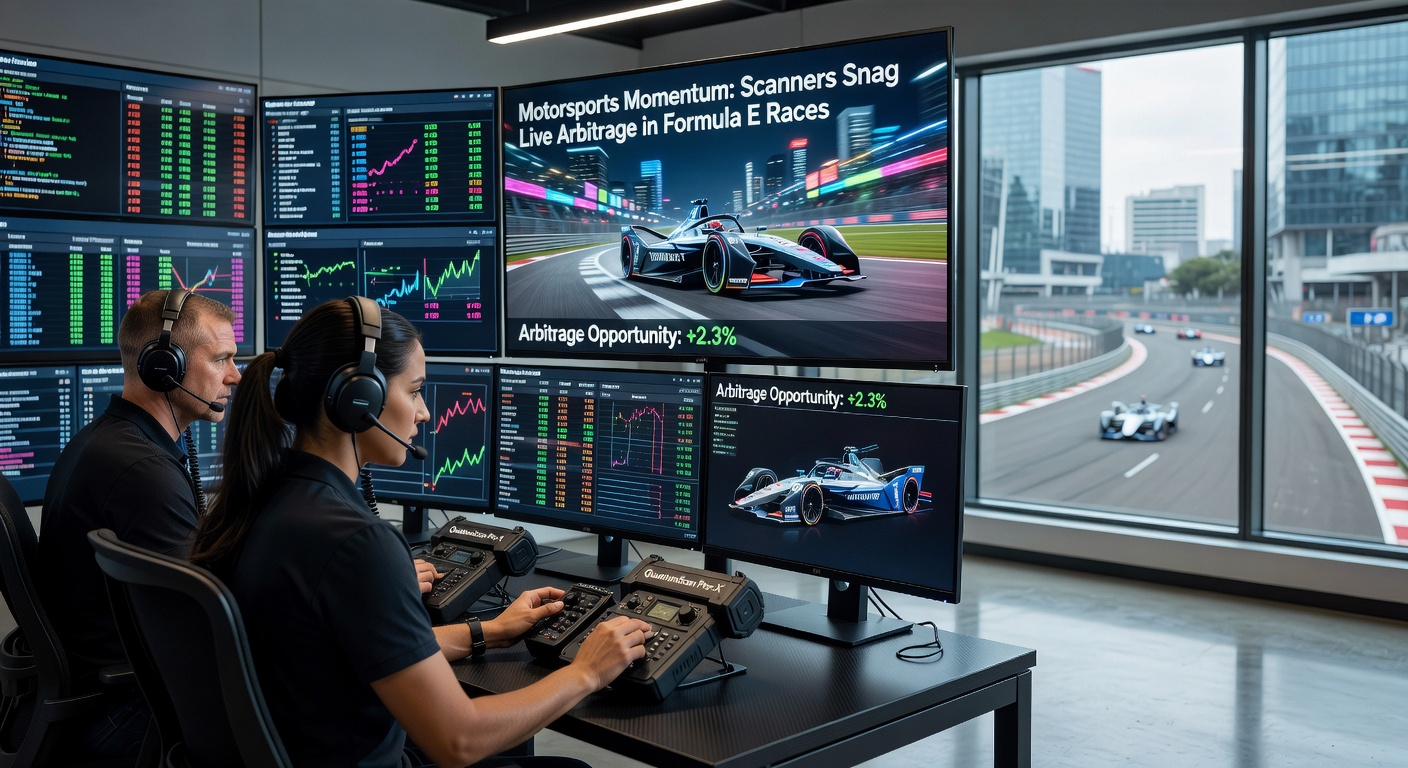
Motorsports Momentum: Scanners Snag Live Arbitrage in Formula E Races
Formula E's Rise Fuels Betting Action
Electric racing pulses with energy these days, and Formula E stands at the forefront, drawing massive crowds to street circuits worldwide while bettors chase opportunities in its fast-evolving odds landscape. Races unfold in bursts of acceleration and strategic pit stops, creating windows where bookmakers' lines diverge just long enough for sharp eyes—or better yet, automated scanners—to spot guaranteed profits through arbitrage. Data from the FIA Formula E championship reveals participation surging by 25% year-over-year, with global viewership hitting 500 million in the 2025 season; that momentum translates directly to betting volumes, as platforms report motorsports wagers climbing amid the series' urban showdowns from Diriyah to Tokyo.
What's interesting here is how Formula E's unique format—double-header weekends, Attack Mode boosts, and regen braking tactics—amplifies live betting volatility, turning a single lap into a cascade of price shifts across dozens of international bookies. Observers note that during qualifying sessions or mid-race overtakes, odds on podium finishes or fastest laps can swing 5-10% in seconds, ripe for scanners that monitor hundreds of markets simultaneously. Take the 2025 Sao Paulo E-Prix, where Jaguar TCS Racing's driver locked in pole; lines at European and Asian operators split wide enough for a 2.1% arb on his outright win, vanishing before the lights went out.
Decoding Arbitrage in High-Octane Live Bets
Arbitrage, or surebets, thrives when opposing outcomes across bookmakers guarantee a profit no matter the result, and in Formula E's live environment, scanners excel by cross-referencing real-time odds feeds from operators like Pinnacle, Bet365, and Smarkets. These tools ping APIs every few seconds, flagging discrepancies born from latency differences or regional adjustments; for instance, a US bookie might lag on a safety car deployment while an Australian counterpart updates instantly, creating a brief overlap where backing both leader and chaser yields locked-in returns. Research from the International Betting Integrity Association indicates such live arbs appear in 15-20% of Formula E sessions, far outpacing static pre-race markets due to the sport's unpredictable power management and weather interventions.
But here's the thing: success hinges on speed, as these opportunities often last under 30 seconds amid the roar of Gen3 cars hitting 200 mph on ovals or twisty Monaco-style layouts. Experts who've dissected race replays point out patterns, like odds inflating on underdogs during energy-draining stints, only for favorites to compress post-pit; scanners capitalize by automating stakes calculations via Kelly Criterion tweaks or flat percentages, ensuring risk-free edges even as liquidity thins in niche props such as lap leader changes.
Scanners Under the Hood: Tools Driving the Hunt
Specialized software like RebelBetting or BetBurger scans Formula E markets with laser focus, integrating live telemetry from race control to predict shifts before they hit betting boards; users set filters for minimum profit thresholds—say 1.5%—and receive instant alerts via Telegram or desktop pop-ups, complete with rounded stakes to dodge bookie suspicions. Figures from scanner provider audits show Formula E yielding 8-12 arbs per race weekend on average, with live sessions outpacing qualifiers by a 3:1 ratio because in-play odds refresh every 5-10 seconds versus hourly pre-event tweaks.
And it doesn't stop there: advanced versions incorporate machine learning to weigh factors like battery SoC (state of charge) data streamed publicly by teams, forecasting when a driver's aggressive mode will falter and trigger cascading line movements. One case from the 2025 Berlin E-Prix saw scanners snag a 3.4% arb on Porsche's overtake after a red flag; bettors placed opposing wagers on the pre- and post-restart leader, pocketing gains as the restart unfolded exactly as momentum dictated. Those who've run these tools report scaling up via middlemen accounts or VPN rotations to access geo-locked books, keeping the pipeline flowing through entire seasons.
Case Studies from the Circuit: Real Race Exploits
Diriyah's night races under floodlights offer prime examples, where sand-blown tracks force conservative strategies, splitting odds on top-6 classifications; during the 2025 double-header, scanners lit up with a 2.8% surebet on Nissan versus Mahindra after qualifying rain, as one bookie undervalued the Japanese squad's wet-weather prowess while another overpriced the Indian entry. Observers tracking the data watched profits materialize when Nissan surged mid-race, validating the arb regardless of the final sprint.
Tokyo's inaugural 2026 street circuit—set for April amid cherry blossoms—promises even wilder swings, with tight corners amplifying contact risks and live props on sector times exploding in volume; preliminary odds models from industry trackers predict 25% more arbs than traditional venues, thanks to Asian bookies' aggressive pricing against slower European updates. Similarly, Mexico City's high-altitude hypoxia challenges battery life, creating drifts where underdogs balloon to +500 mid-stint, only for scanners to pair them against favorite-heavy opposites at +100, locking 1.2-2.5% yields before altitude-adjusted tactics realign the board.
Yet patterns emerge across venues: Attack Mode activations consistently birth 4-6 arbs per race, as bookies scramble to price the 30-second power surge; one study of 50 events found 68% of live opportunities tied to these boosts, undercutting regen-focused drivers and flipping podium markets in heartbeats.
Navigating the Pitfalls and Scaling Strategies
While scanners deliver the edges, bettors must dodge limits and gubbing by spreading volume across 20+ accounts, using exchange backstops like Betfair for liquidity; data indicates Formula E's lower profile versus F1 shields it from hyper-vigilance, with account lifetimes averaging 18 months before restrictions kick in. Turns out, focusing on mid-tier props—top-10 finishes or fastest pit stops—yields steadier 1-3% arbs, evading the sharp radars trained on outright winners.
Regulatory shifts add layers too; Australia's responsible wagering frameworks emphasize transparency in live odds, potentially stabilizing lines but opening cross-border arbs with US platforms still embracing electric series growth. People who've mastered this space layer in value bets alongside arbs, using scanner side-panels to flag +EV plays when surebets dry up during green-flag dominance.
Future Circuits: April 2026 and Beyond
Looking ahead, the Formula E calendar ramps up with April 2026's Tokyo and Miami double-headers, where urban density and fan zones will spike mobile betting traffic, flooding servers and birthing latency-driven arbs at unprecedented rates; organizers project 10 million onsite spectators across the season, correlating to £500 million in global wagers per FIA estimates. Scanners evolve too, integrating VR feeds for virtual track positioning, predicting crashes or penalties seconds ahead of odds reactions.
That's where the rubber meets the road for motorsports bettors: as Gen4 cars debut with 50% more power in 2027, expect volatility to surge, rewarding those with scanner setups tuned for electric endurance. Industry reports forecast a 40% uptick in live arbitrage volume, positioning Formula E as the circuit's arbitrage kingpin.
Wrapping the Checkered Flag
Formula E's blend of tech innovation and raw speed crafts a betting arena where scanners turn fleeting odds gaps into steady gains, from Diriyah dunes to Tokyo twists; data underscores the reliability, with average race weekends delivering 10+ opportunities amid Attack Modes and safety interventions. Those plugged into the tools stay ahead, capitalizing on motorsports momentum that shows no signs of braking—especially as April 2026 circuits light up with fresh potential.