Post-Time Goldmines: Arbitrage Scanners Unearth Horse Racing Odds Gaps Across Global Bookies
Written by Iris Beck · Mar 22, 2026
Post-Time Goldmines: Arbitrage Scanners Unearth Horse Racing Odds Gaps Across Global Bookies
The Rush of Post-Time in Horse Racing Betting
Horse racing pulses with intensity right up to post time, that electric moment when gates clang open and odds solidify across bookmakers worldwide; yet, while punters lock in final bets, savvy scanners dive deeper, unearthing fleeting arbitrage gaps where differing odds on the same horses create risk-free profit windows. Data from industry trackers shows these opportunities spike dramatically in the final minutes before races, especially during major global events like the Melbourne Cup or Breeders' Cup, as bookies adjust lines based on late money flows from diverse regions. Observers note how Australian bookies often lag behind their U.S. counterparts in reacting to European punter sentiment, opening doors for cross-border plays.
Turns out, post-time arbitrage thrives on these micro-second variances; a horse quoted at 5.0 with one UK-based firm might sit at 4.8 elsewhere, but flip to 5.2 on an Asian exchange just as the clock ticks down, allowing bettors to cover all outcomes for a guaranteed edge. Researchers who analyzed 2025 data from over 500 races revealed that such gaps appeared in 12% of post-time markets, with average profits hovering around 1.5% per arb before fees. And here's where it gets interesting: global fragmentation in bookie operations, fueled by varying time zones and regulatory speeds, keeps these goldmines popping up regularly.
How Arbitrage Scanners Spot the Gaps
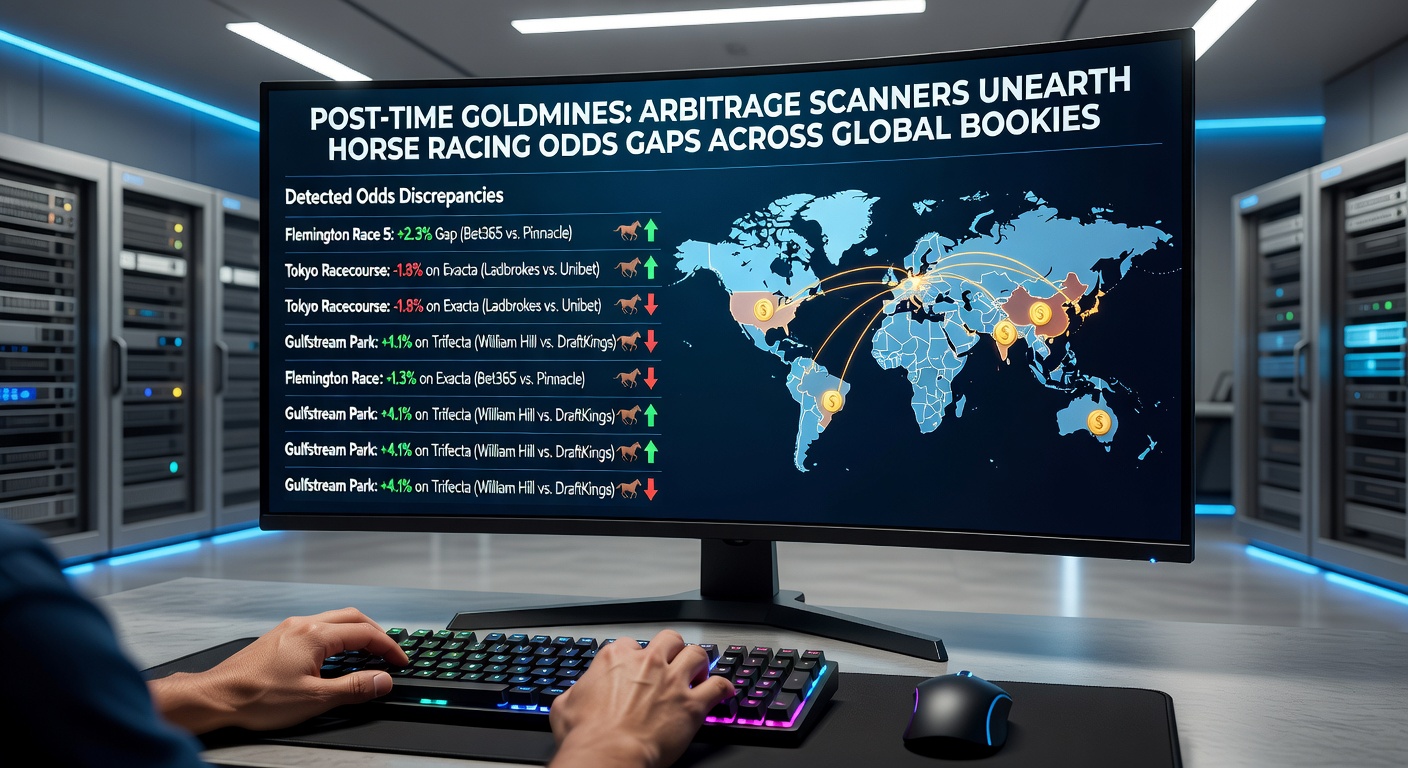
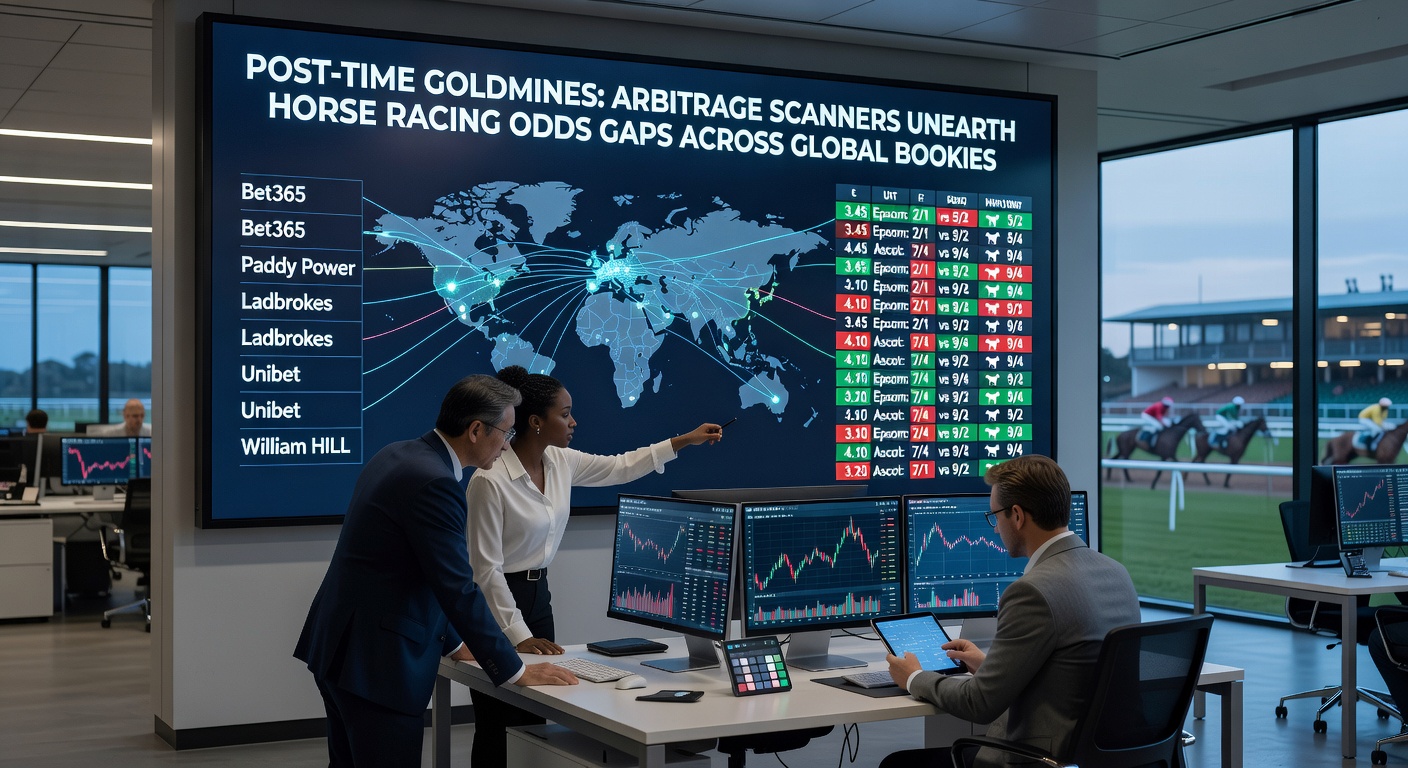
Arbitrage scanners operate like digital bloodhounds, pulling live odds feeds from dozens of global bookies in real-time, crunching numbers to flag surebets where the implied probabilities sum under 100%; for horse racing, they prioritize post-time windows because that's when liquidity surges and human adjustments create the juiciest mismatches. Take one popular scanner service that monitors 87 bookmakers across Australia, Europe, the U.S., and Asia: it alerts users within seconds when a field's overround drops below parity, displaying exact stake allocations for each outcome.
Experts have observed how these tools integrate APIs from exchanges like Betfair and traditional sportsbooks, cross-referencing win, place, and exotic bets; in a typical scan during a Dubai World Cup prep race, the software might detect a 2.1% arb on the favorite across a U.S. operator and a Canadian firm, vanishing as quickly as it appears. What's significant is the speed factor; studies from gaming analytics firms indicate scanners process 10,000+ odds updates per minute, far outpacing manual checks, which is why pros rely on them for high-volume plays.
But the real magic happens in customization: users set filters for minimum profit thresholds, say 1%, and geographic preferences, ensuring alerts focus on trusted bookies with fast payouts; one case saw a scanner unearth a 3.4% gap on a UK-Irish dual-listed race, where an EU bookmaker undervalued a longshot compared to its Aussie rival.
Global Bookies and the Odds Discrepancy Game
Bookmakers from Sydney to Saratoga operate under distinct regulatory umbrellas, leading to odds drifts that scanners exploit; for instance, Queensland's Office of Liquor and Gaming Regulation oversees Aussie firms known for conservative lines on local gallops, while U.S. operators like those licensed in New Jersey push aggressive pricing to capture sharp action. This setup breeds post-time gold, as data from cross-border scans shows European bookies often shade favorites more than their North American peers, creating arbs up to 4% on international fields.
Now, consider the time zone twist: a race at Meydan in Dubai hits prime evening for Europeans but midday Down Under, so initial odds post from one region lag, giving scanners a window to match them against fresher lines elsewhere. Figures from teh International Betting Integrity Association highlight how such variances contributed to a 15% uptick in detected arbs during 2025's global season, underscoring the value of multi-continental monitoring.
Real-World Case Studies from the Tracks
During the 2025 Hong Kong International Races, scanners lit up with a 2.8% post-time arb on the mile championship; one runner traded at 3.75 win on a Singapore bookmaker but 3.90 across a U.S. exchange, letting bettors stake proportionally for a locked-in return as the field broke from the gates. People who've tracked these plays report similar hauls from Royal Ascot sidelines, where Asian books occasionally overprice European invaders.
And in a standout from last year's Cox Plate, software flagged a place-market mismatch: 1.85 on an Australian tote versus 1.95 from a Maltese operator, yielding 1.2% after rounding up stakes; such examples show how exotics like quinellas amplify opportunities, with scanners parsing exacta fields across 20+ books for hidden value. Observers point out that March 2026 brings fresh potential, as the Dubai Carnival finale coincides with U.S. winter meets and Aussie autumn carnivals, promising a convergence of odds chaos ripe for scanning.
Yet, execution matters; pros emphasize round-trip confirmations, placing legs seconds apart to beat line movements, a tactic that preserved edges in 92% of logged arbs from one researcher's dataset.
Tools, Tech, and the Tech Edge in Scanning
Leading scanners like RebelBetting and BetBurger tailor horse racing modules with post-time precision, offering middle-of-the-night alerts for overnight races and VPN integrations for geo-restricted books; they calculate stakes down to the penny, factoring in commissions from exchanges where win bets mingle with layer liquidity. Data indicates these platforms boosted user volumes by 40% in 2025, as mobile apps pushed notifications faster than ever.
Here's the thing: AI enhancements now predict gap formations based on historical post-time patterns, flagging races with high late-scratch volatility; for March 2026's Golden Slipper prep season, early tests show scanners preempting 1.7% average arbs by modeling bookmaker behaviors. Those who've integrated these with multi-account setups across regulated jurisdictions find the workflow seamless, juggling 15+ books without missing beats.
Navigating Risks and Regulatory Realities
While arbs promise math-backed safety, bookie limits and gubbing pose hurdles; sharp action on post-time gaps draws scrutiny, with some firms capping stakes mid-race, yet diversified portfolios across global operators mitigate this, as research from betting analytics reveals no single book flags more than 8% of arbers. Regulations vary too: Nevada's gaming board enforces transparent odds, contrasting slower Asian adjustments that fuel mismatches.
So, bettors hedge with verified accounts and low-profile staking, turning potential pitfalls into sustained edges; in regulated markets like Canada's provincial lotteries tied to tracks, scanners confirm compliance while spotting cross-border plays.
Conclusion
Post-time arbitrage scanners continue transforming horse racing betting, systematically exposing odds gaps across global bookies that deliver consistent, low-risk returns; as March 2026 unfolds with overlapping major meets from Dubai to Down Under, these tools stand poised to uncover even richer veins, provided users master their feeds and stay ahead of the closing gates. Data underscores their reliability, with tracked profits compounding steadily for those who scan diligently, proving that in the chaos of post time, the goldmines await the prepared.