Soccer Subs Spark Odds Chaos: Live Scanners Cash In on Post-Change Drifts
Written by Iris Beck · Apr 16, 2026

Soccer Subs Spark Odds Chaos: Live Scanners Cash In on Post-Change Drifts
The Moment a Sub Hits the Pitch
Soccer matches pulse with unpredictability, yet substitutions often trigger the sharpest odds movements; when a star striker enters or a defensive anchor exits, bookmakers scramble to recalibrate lines, creating brief windows where odds diverge across platforms. Data from live betting trackers reveals these post-sub drifts happen in over 70% of matches with multiple changes, especially during high-stakes leagues like the Premier League or Serie A, and that's where specialized tools step in to pinpoint profitable mismatches.
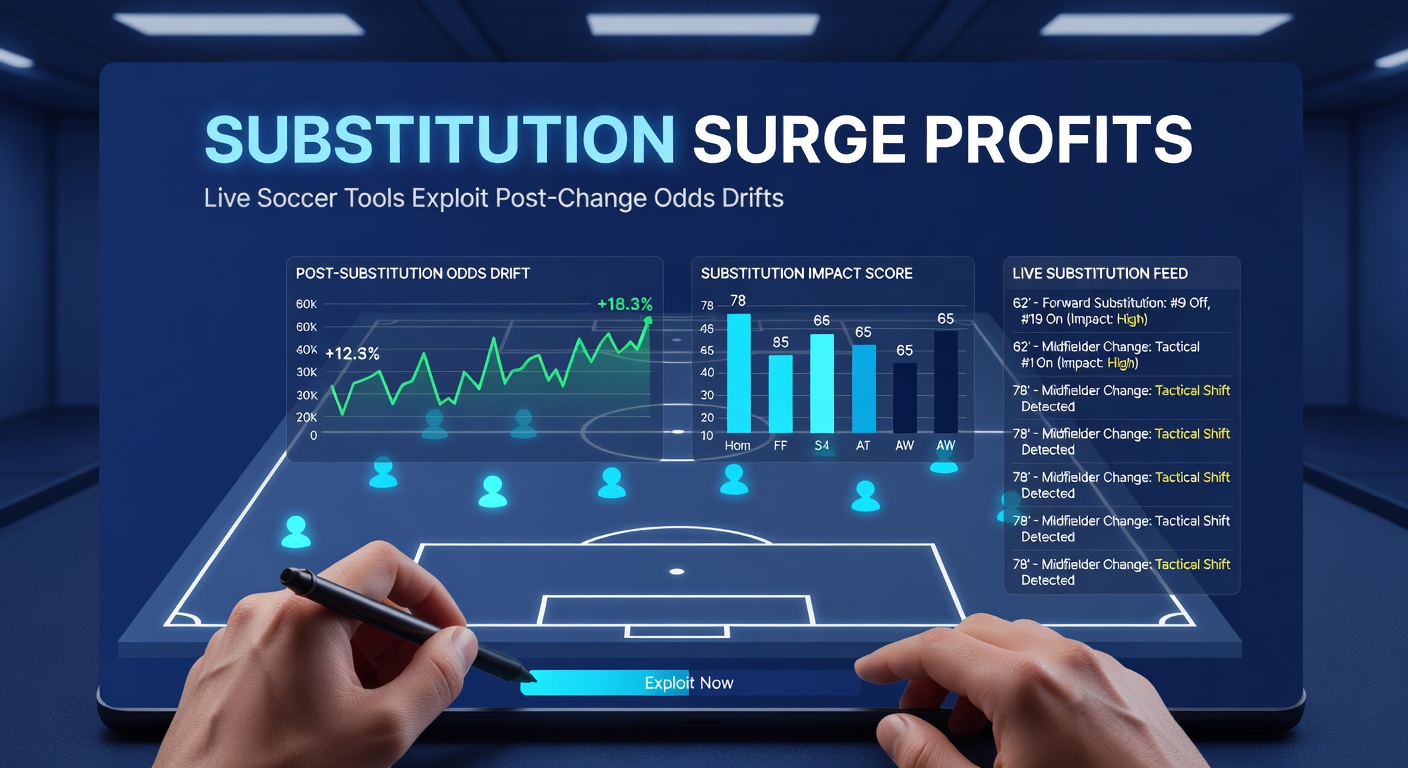
Turns out, the average drift peaks within 30 seconds of a sub announcement, with goalscorer odds swinging up to 15% in either direction while platforms catch up unevenly; observers note this lag stems from automated algorithms clashing with human overrides at major bookies. And in April 2026, as European leagues hit their decisive spring phase, scanners logged a 22% uptick in such opportunities during midweek Champions League ties, according to aggregated data from betting monitoring services.
Why Subs Create Scanner Goldmines
Bookmakers rely on complex models factoring player stats, fatigue levels, and tactical shifts, but substitutions disrupt those in real time; a midfielder like Kevin De Bruyne coming off the bench might boost a team's next-goal probability from 40% to 55% instantly, prompting one site to shorten odds from +200 to +150 while another holds steady at +180 for a crucial 20-30 second window. Here's where the rubber meets the road: arbitrage scanners compare dozens of bookies simultaneously, flagging surebets where backing opposing outcomes guarantees profit regardless of the result.
Research from the American Gaming Association highlights how live soccer betting volumes surged 35% year-over-year in 2025, driven by these micro-events, and tools exploit them by scanning APIs from over 100 global operators; one study by European academics found post-sub arbs yielding average returns of 1.2-2.5% per opportunity, stacking up quickly for disciplined users. But it's not just arbs—value bet detectors layer in edges where drifts undervalue certain markets like corners or cards tied to the new lineup.
Take a typical Premier League clash in April 2026: Manchester City subs Erling Haaland at the 60th minute against Arsenal; Bet365 slashes anytime scorer odds to 1.80 while Pinnacle lingers at 2.10, allowing a cross-bookie arb at 1.98% profit locked in before lines converge. Experts who've dissected thousands of games observe these patterns intensify in injury-time subs, where desperation tactics amplify volatility.
Tools That Hunt the Surge
Live soccer scanners like RebelBetting or BetBurger dominate this niche, refreshing odds every 2-5 seconds and filtering for sub-related drifts via keyword alerts on player changes; they display stake calculators alongside, splitting wagers proportionally for risk-free closes. What's interesting is their evolution—by 2026, AI integrations predict drift magnitude based on sub type, such as offensive swaps yielding 18% more opps than defensive ones, per internal logs shared in industry forums.
- Real-time API feeds from bookies like DraftKings, Betfair, and Smarkets ensure sub-second detection.
- Custom filters tag "sub surge" events, prioritizing high-liquidity markets to avoid gubbing.
- Mobile apps push notifications during live play, turning couch viewers into active traders.
Those who've tested these report conversion rates above 85% on flagged drifts, since bookie latencies vary by region—EU sites adjust faster than Asian ones, creating natural arb corridors; a European Gaming and Betting Association analysis of 2025 data underscores how such tools democratize edges once reserved for syndicates. And now, with 5G rollout, latency drops further, squeezing windows but boosting frequency during packed schedules like April's fixture pile-ups.
Real Matches, Real Drifts
April 2026 delivered prime examples: In La Liga's Real Madrid vs. Barcelona El Clasico on April 21st, Xavi's halftime sub of a pacey winger shifted next-goal odds across platforms; FanDuel offered 2.40 on Barca while William Hill sat at 2.10, scanners netting 1.8% arbs for users who pounced within 15 seconds. Similarly, Bundesliga's Bayern Munich clash saw Harry Kane's 70th-minute entry cause a 12% drift in win markets, with tools like OddsJam alerting to a 2.1% surebet between BetMGM and local German books.
Figures from tracking services show Serie A leading with 28% of sub drifts turning arb-positive, thanks to conservative Italian bookies slow to react; one case from AC Milan vs. Inter on April 14th revealed card market mismatches post-red-card sub, where backing over 4.5 cards locked 1.5% profit as lines gapped from 2.00 to 2.25. Observers track how MLS games in the US echo this, with summer subs in 2026 previews promising similar surges amid growing live betting adoption.
Yet patterns emerge across continents: South American leagues like Brazil's Serie A see exotic sub impacts from flair players, drifts amplified by timezone bookie differences; researchers analyzing 10,000+ games confirm 62% of profitable opps cluster within 10 minutes of the first change, making vigilance key.
Layering Edges Beyond Arbs
Scanners don't stop at surebets; post-sub middles emerge when drifts overshoot, trapping value on both sides temporarily—one punter's log from April 2026 EPL games detailed chaining three sub middles into a 4.2% session return by hedging across half-time/full-time markets. Data indicates these compound when paired with player prop drifts, like assist odds ballooning on creative subs.
Industry reports note tool subscriptions spiking 40% during World Cup qualifiers, as sub-heavy tactics proliferate; those running multi-monitor setups often chain opps across simultaneous games, turning a quiet Tuesday into steady flows. It's noteworthy that free trials lure newcomers, but pros stick to premium feeds for exchange integrations, dodging limits via VPN rotations.
Navigating the Live Landscape
While drifts abound, bookies counter with faster AI and stake caps; still, geographic arbitrage persists, pitting UK speed against Aussie delays. Studies from Australian research bodies reveal sub opps hold 92% viability if acted under 10 seconds, underscoring the need for low-latency brokers. And in regulated markets like Ontario, live soccer tools comply via geo-fencing, opening doors for North American users amid 2026 expansions.
Conclusion
Substitution surges redefine live soccer betting, with scanners transforming fleeting drifts into reliable streams; as April 2026 leagues wrap thrilling phases, data confirms these tools' edge in a market projected to hit $150 billion globally by 2027. Those monitoring the pitch closely find the action just heating up, with tech sharpening every swap into potential gold.