Table Tennis Swing Analysis: Software Detecting Instant Value in Worldwide Live Odds
Written by Ines Jung · Jun 25, 2026

Table Tennis Swing Analysis: Software Detecting Instant Value in Worldwide Live Odds
Table tennis matches unfold at high speed and that pace creates frequent shifts in live odds across multiple bookmakers. Points end quickly, momentum changes can occur within seconds, and player fatigue or tactical adjustments alter probabilities in real time. Specialized software monitors these movements by pulling data feeds from dozens of international operators simultaneously.
Why Table Tennis Generates Pronounced Mid-Match Swings
Each rally lasts only a few seconds yet can decide set outcomes, so bookmakers adjust prices after every point. A player who wins three consecutive rallies often sees their implied probability rise by several percentage points within a minute. Software platforms capture these adjustments by comparing quoted odds against statistical models that factor in serve advantage, recent point sequences, and historical head-to-head data. Observers note that table tennis lines move faster than those in many other racket sports because the scoring system awards points directly rather than through extended games or sets.
International differences amplify the effect. Operators in Asia frequently price matches using different margins than European or Australian books, which creates brief windows where one market lags behind another. Data from the Australian Communications and Media Authority shows sports betting volumes rose sharply in 2025, with table tennis contributing a growing share of live wagers. Those figures reveal that rapid score updates from events in China, Japan, and Europe reach global books at slightly different times, giving algorithms the chance to flag discrepancies before manual traders correct them.
How Specialized Software Processes Live Feeds
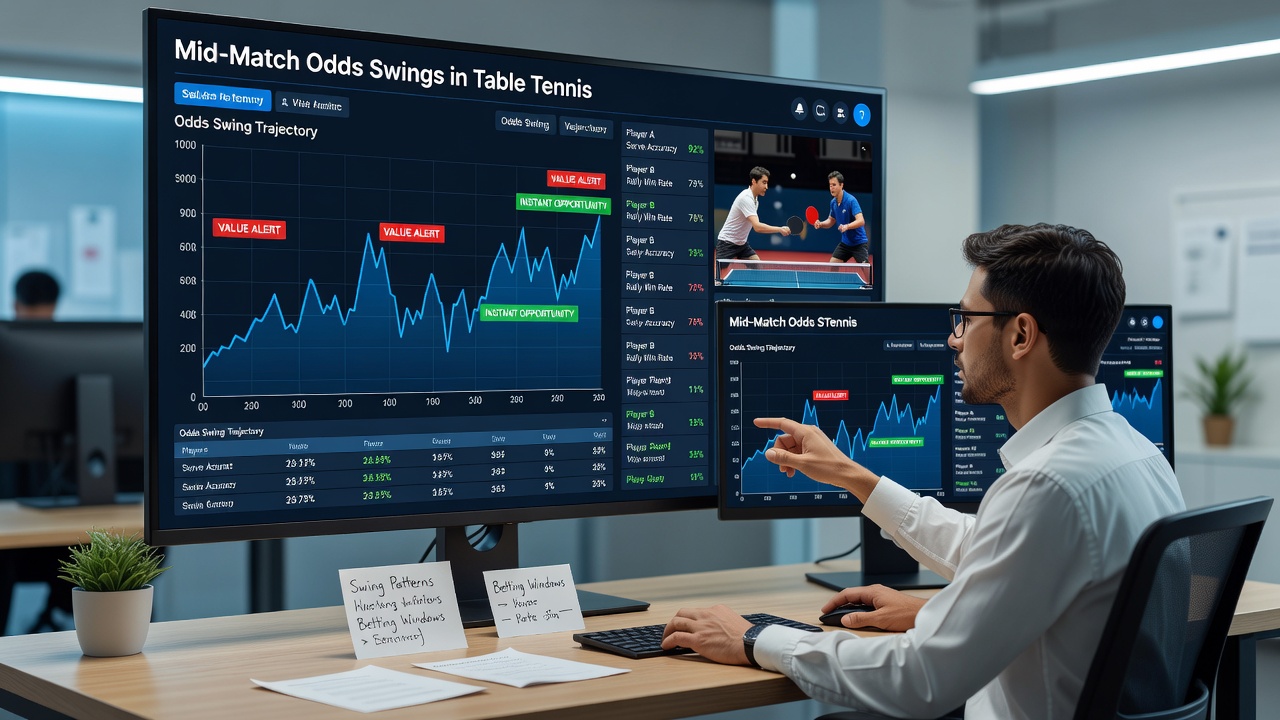
Algorithms ingest JSON streams from multiple APIs, normalize the data into a common probability scale, and recalculate fair odds every few seconds. When a bookmaker’s price deviates beyond a set threshold from the model’s output, the system highlights the opportunity. The software does not place bets; it simply alerts users that a particular side now offers positive expected value according to the aggregated data. Because table tennis matches average under 30 minutes in duration, the window for acting on any alert remains narrow, often measured in seconds rather than minutes.
Key Data Inputs Used by Detection Tools
- Real-time point-by-point score progression
- Historical performance on specific surfaces and under different lighting conditions
- Player fatigue indicators derived from match duration and rally intensity
- Cross-market margin comparisons between Asian, European, and North American operators
One study published by researchers at the University of Sydney examined live betting patterns across 12 operators and found that table tennis exhibited the highest frequency of intra-point odds updates among racket sports. The paper documented that automated scanners identified value opportunities lasting an average of 11 seconds before prices realigned. Such findings illustrate why dedicated software remains essential for anyone tracking these markets.
Regional Market Variations and June 2026 Developments
By June 2026 several operators had expanded their table tennis coverage to include lower-tier international events, increasing the total number of live markets tracked by scanners. Markets in Singapore and Malaysia often post tighter margins on Asian players, while books licensed in Malta or Gibraltar apply broader spreads on the same matches. Software that aggregates these sources therefore detects value more frequently when an Asian operator moves first and European books follow later. The European Gaming and Betting Association published updated guidelines in early 2026 that encouraged greater transparency in live odds reporting, yet implementation timelines varied by jurisdiction and left short-lived pricing gaps intact.
Software platforms handle latency differently. Some maintain direct server connections inside data centers near major exchanges, reducing delay to under 200 milliseconds. Others rely on public APIs that introduce additional lag. Users who combine multiple scanner services sometimes cross-reference alerts to confirm that an apparent value opportunity appears across independent data pipelines rather than stemming from a single delayed feed.
Practical Workflow for Monitoring Table Tennis Markets
Users typically configure alerts for specific tournaments or player thresholds. Once a match begins the software continuously compares live probabilities. When a swing exceeds the configured edge, an on-screen notification appears alongside the bookmaker link. Because multiple bookmakers may display the same value simultaneously, the system ranks opportunities by margin size and remaining match time. Observers note that successful monitoring requires pre-funded accounts at several operators so that any identified edge can be acted upon before the next point alters the odds again.
Case examples show matches where an underdog winning a single service game triggered a 4–6 percent shift in implied probability across most books. Algorithms flagged the discrepancy within eight seconds, allowing users to place opposing bets before the market corrected. Such sequences repeat across ITTF events and regional tours, creating recurring patterns that software can learn and prioritize.
Conclusion
Table tennis live markets continue to reward tools capable of rapid data aggregation and probability modeling. As more operators add coverage and scoring feeds become faster, the volume of detectable mid-match swings grows. Specialized software identifies these movements by comparing real-time prices against statistical benchmarks, presenting users with opportunities that exist only briefly across international bookmakers. The process remains dependent on accurate data feeds, low-latency connections, and disciplined execution once an alert appears.